
 Ghana: The Chocolate Problem
Can Chocolate Help Protect a Forest?
Chocolate is one of those foods that feels completely removed from nature. It arrives in shiny wrappers, sits on supermarket shelves and disappears piece by piece. We think about the taste, the brand and especially in this economy, the price. We rarely think about where the cocoa came from or what happened before it reached the factory.
In Ghana, that story begins on small farms across the country’s forest regions. Cocoa has been grown there for generations and remains an important source of income for farming families. Ghana is also one of the world’s major cocoa producers, meaning the country’s farms are connected to a global industry that stretches all the way from rural communities to supermarkets around the world.
However, growing cocoa requires land, and with that comes its own consequences.
As farms expand, forests can be cleared to make room for more crops. Older cocoa farms can also become less productive, creating pressure to find new areas to grow. At the same time, Ghana’s forests are facing other threats, including illegal mining and deforestation.
The result is a difficult situation. Cocoa is important to Ghana’s economy and to the families who grow it, but the forests around those farms are valuable too. They store carbon, provide habitat for wildlife and support communities that depend on the land.
The question is how to protect both.
That is what the Cocoa & Forests Initiative (CFI) is trying to address.
What has been implemented?
The Cocoa & Forests Initiative began in 2017, bringing the Ghanaian government together with major cocoa and chocolate companies to tackle deforestation linked to cocoa production.
Rather than simply reducing cocoa production, much of the work focuses on making existing farms more productive. Older and less productive cocoa farms can be rehabilitated, helping farmers produce more from land they already have, instead of continually expanding into new areas.
CFI has also supported agroforestry, where cocoa is grown alongside other trees. This is particularly relevant to cocoa because the crop naturally grows under shade. Keeping taller trees within farms can provide shade and help create a more varied agricultural landscape, while farmers can still produce cocoa underneath them. Tree planting, farm rehabilitation and restoration have all formed part of the initiative’s work.
Another part of the programme is about something consumers rarely get to see – where the cocoa actually came from.
Ghana has been mapping cocoa farms and developing traceability systems that can follow cocoa through the supply chain. CFI reported that 83% of the cocoa supply chain was traceable in 2023, with Ghana continuing to develop its national traceability system (World Cocoa Foundation, 2024).
This gives companies a much clearer picture of their supply chains. If cocoa can be linked to a particular farm and location, it becomes possible to identify where production is taking place and investigate whether farms are encroaching on protected forest.
CFI also connects with Ghana’s Cocoa emissions reduction programme, bringing carbon finance into the picture. Reductions in deforestation can be measured and converted into carbon credits, creating a financial incentive for protecting forests. In 2023, Ghana received $4.8 million in results-based payments after independently verified reductions of almost one million tonnes of carbon emissions (World Bank, 2023).
For a country trying to protect its forests, this creates an interesting possibility. A forest does not necessarily have to be cleared to have economic value; keeping it standing can generate income as well.
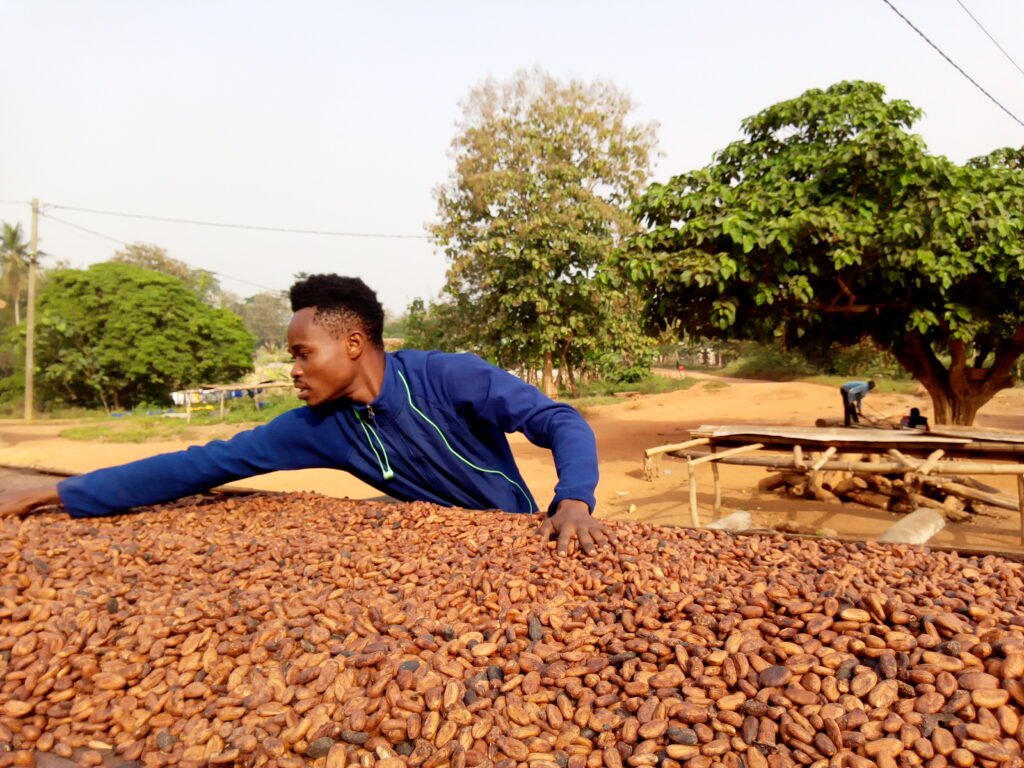 Ghanaian cocoa farm. Image: King Bangaba / Wikimedia Commons, CC BY-SA 4.0.
Why does it matter?
The environmental side of cocoa can look quite different depending on where you are standing.
From outside Ghana, clearing a forest for agriculture can seem like an obvious environmental problem. For a farmer whose income depends on the productivity of their land, the decision is more complicated. An ageing farm may produce less cocoa; household costs still need to be paid and finding additional land can seem like a practical solution.
This is why CFI’s work includes farmer livelihoods and income diversification alongside its environmental measures. In 2023, the initiative reported that more than 100,000 people had benefited from livelihood and income-generating activities (Cocoa & Forests Initiative, 2024).
The idea is to reduce some of the economic pressure behind expansion. If farmers can improve the productivity of existing farms and have other ways to earn an income, protecting surrounding forests becomes more realistic.
It also means that sustainability cannot sit entirely with the farmer. Chocolate companies have a role in understanding where their cocoa comes from and what is happening within their supply chains. Traceability can help with that by connecting cocoa purchases to specific farms and locations.
For consumers, much of this remains invisible. A bar of chocolate might have travelled through several countries and businesses before it reaches a shop, but its story began much earlier, with decisions being made about how a piece of land in Ghana is used.
The bigger sustainability picture
Ghana’s cocoa industry is a good example of how difficult it can be to separate environmental problems from economic ones.
The same landscape may be providing a farmer with an income, producing cocoa for international markets, supporting wildlife and storing carbon. Protecting one of those functions can affect the others, which is why simply asking farmers to stop expanding is unlikely to be enough.
CFI is trying to address several parts of the system together. Improving existing farms can reduce pressure for expansion. Agroforestry can bring trees back into agricultural landscapes. Traceability can make supply chains easier to monitor, while carbon finance can provide another source of funding for forest protection.
There are still serious challenges. Ghana’s forests continue to face pressure from agricultural expansion and traceability alone does not guarantee that sustainable practices are being followed. There is a difference between knowing where cocoa was produced and ensuring that the land is being managed responsibly.
The wider lesson goes beyond cocoa. Many sustainability problems come down to the same basic question: how do you protect something when people also depend on using it?
In Ghana, that question is being played out through one of the world’s favourite foods. The chocolate we buy may look simple, but behind it sits a much more complicated relationship between farmers, companies, forests and the land itself.
And that is the part of the chocolate story we rarely get to see.