
 Kazakhstan: The remarkable Return of the Saiga
Imagine looking across the Kazakh steppe and seeing thousands of antelopes moving across the grasslands, their strange, oversized noses bobbing as they run.
Meet the saiga. With its unusual, drooping nose and pale, curved horns, it looks like something from another age. And in a way, it is: saigas have roamed the grasslands of Central Asia since the Ice Age. But by 2003, hunting and poaching had reduced their numbers in Kazakhstan to an estimated 20,000.
Today, the picture is almost unbelievable. Kazakhstan’s saiga population reached more than 2.8 million in 2024, with a 2025 census reporting almost four million (Altyn Dala Conservation Initiative, 2024; FBRK, 2026).
That is a remarkable comeback. But it did not happen by accident. So how did Kazakhstan help bring millions of these animals back — and what can the rest of the world learn from it.
What is Kazakhstan doing?
The answer begins with a simple but difficult task: giving the saiga a chance to survive.
After the collapse of the Soviet Union, poaching became a major threat. Saiga horns were highly sought after in traditional medicine markets, and the animals were killed in large numbers. Their population fell so low that their future was in serious doubt.
Kazakhstan responded by strengthening protection against illegal hunting. Rangers worked to stop poaching, while conservationists studied the animals and helped protect the huge stretches of grassland they need to survive. In 2005, the Altyn Dala Conservation Initiative — meaning “Golden Steppe” — brought government bodies and conservation organisations together to protect the saiga and restore the wider landscape (Altyn Dala Conservation Initiative, n.d.).
The landscape matters more than you might think. Saigas do not stay in one small area. They travel long distances across the steppe in search of food and suitable places to give birth. They need space to move, without too many barriers cutting across their routes. Protecting their habitat means looking after the grasslands and wetlands that support them, too.
Saigas can reproduce quickly. Females can begin breeding at around eight months old, and twins are common. Once hunting pressure fell, the population had a chance to grow rapidly.
But the recovery was not a straight line upwards. In 2015, a devastating disease outbreak killed around 200,000 saigas in just a few weeks. The loss was immense. Yet protection efforts continued, and the population recovered again (Altyn Dala Conservation Initiative, n.d.).
In 2023, the International Union for Conservation of Nature changed the saiga’s global status from Critically Endangered to Near Threatened. It was a rare and significant sign of progress (IUCN, 2023).
The story is not that one clever solution saved the saiga overnight. It is that years of protection, cooperation and patience gave an animal that reproduces quickly the opportunity to recover.
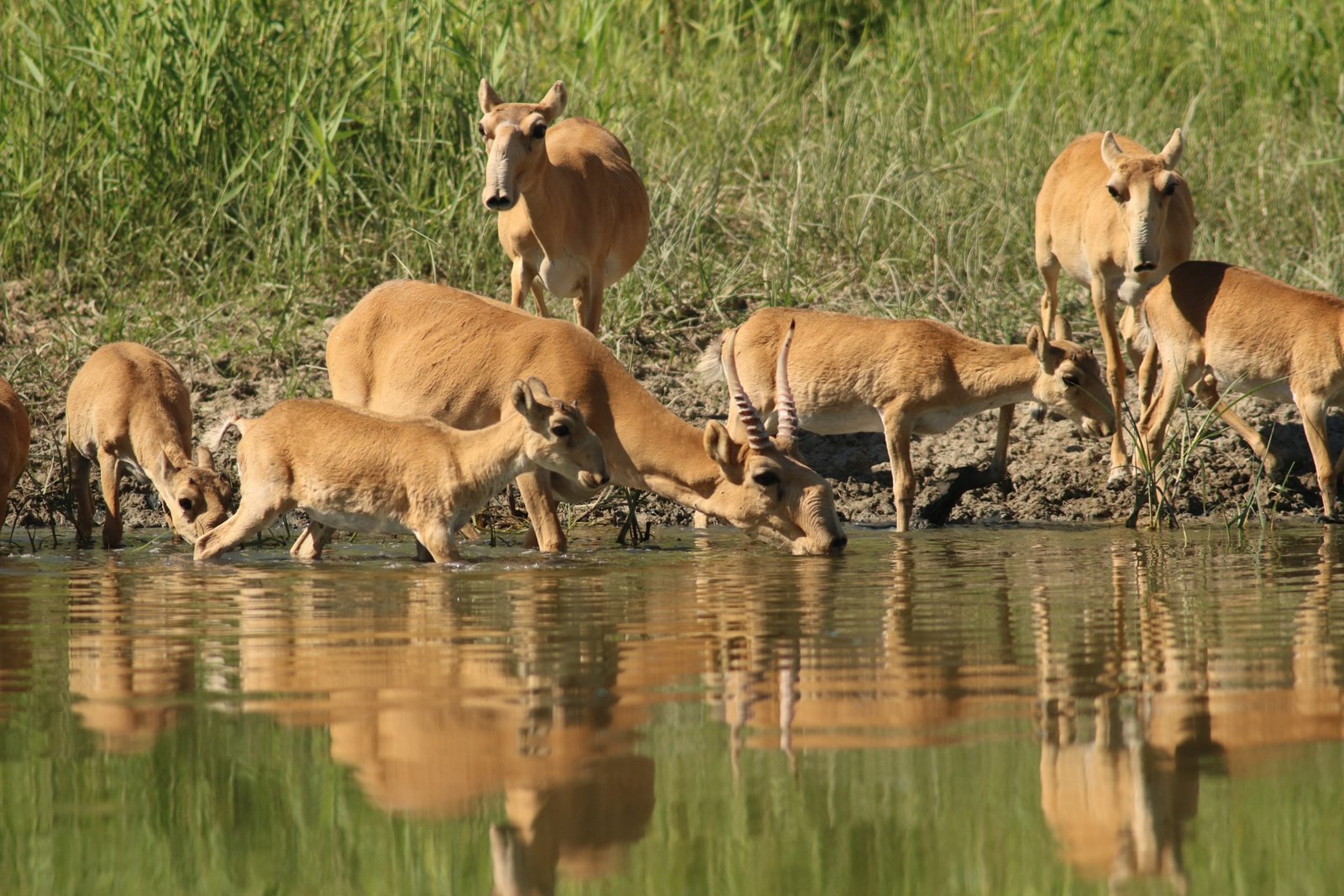 Saiga Antelope, Kazakhstan. Photo: AleksandrPutilin / Wikimedia Commons, CC BY-SA 4.0.
Why does it matter?
The saiga’s return is about more than saving an animal with an extraordinary face.
Kazakhstan’s steppe is one of the great open landscapes of the world. It may look empty from a distance, but it supports plants, birds, mammals and the people whose lives depend on the land. Saigas are part of that living system, moving across the grasslands and feeding on a variety of plants.
When a species disappears, the loss can reach beyond the animal itself. Protecting the saiga also helps protect the habitat it depends on — a landscape that needs to remain healthy and connected for many kinds of wildlife.
There is another side to the success. With millions of saigas now roaming Kazakhstan, their growing numbers bring new questions about grazing, water and how wildlife shares land with livestock. Authorities have considered ways to manage the population, including regulated harvesting, prompting debate about how best to protect the animals while responding to the pressures of their recovery.
That makes this story more complicated than a simple happy ending. Bringing a species back is an enormous achievement. Making sure it can thrive alongside people, over the long term, is the next challenge.
The bigger sustainability picture
Conservation stories often focus on what we are losing: shrinking habitats, declining populations and species edging towards extinction. The saiga offers a different view of what is possible.
In 2003, around 20,000 remained in Kazakhstan. By the 2025 census, the reported population was almost four million. That change did not come from breeding animals in captivity and releasing them by the thousand. It came largely from protecting wild populations, reducing poaching and giving the animals room to reproduce and move across their natural habitat.
The lesson is both hopeful and practical. Nature can recover, sometimes on a scale that is difficult to imagine. But it needs more than good intentions: it needs sustained protection, space, scientific monitoring and people willing to keep working long after the headlines fade.
The saiga is still vulnerable to disease, poaching and changes to its habitat. Its future is not guaranteed. Yet the sight of millions of these unusual antelopes returning to the Kazakh steppe shows what can happen when a country gives wildlife a real chance.
Not every conservation story ends with a species returning in its millions. Kazakhstan’s saiga shows that, with the right protection and enough time, the natural world can surprise us.